- By Admin
- 30 March, 2026
- 8 min Read
How healthcare claims management software provides better clinical support in USA?
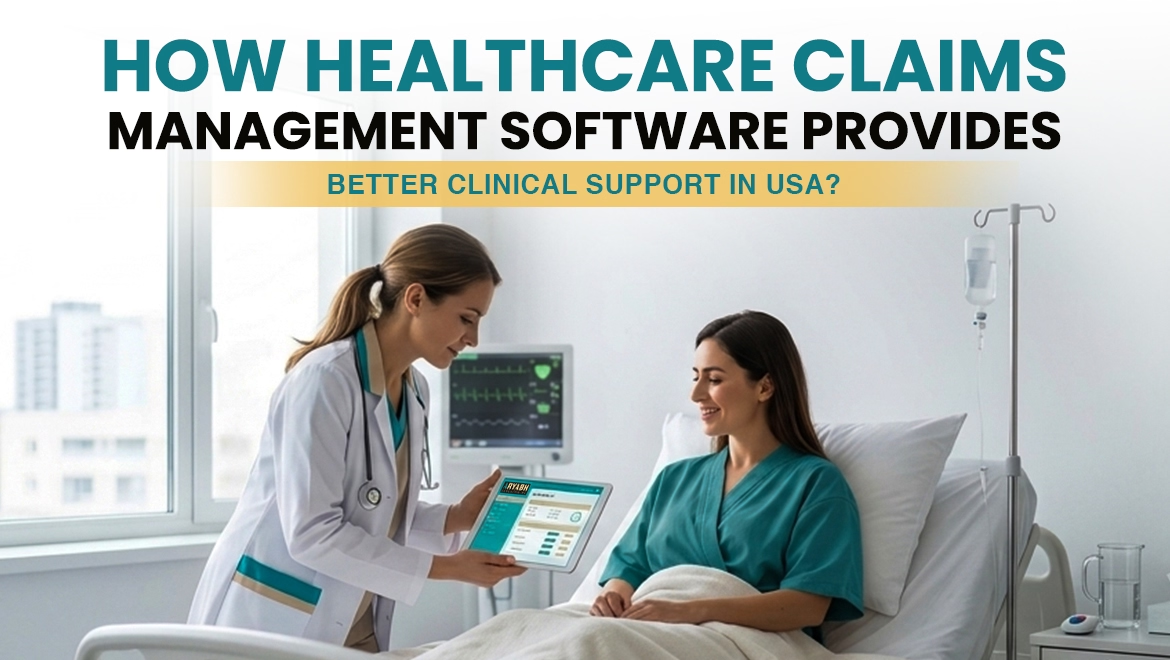
Healthcare systems in the United States are under constant pressure to balance patient care quality, regulatory compliance, and operational efficiency. Claims processing sits at the center of this challenge. When claims are delayed, denied, or disconnected from clinical workflows, the impact reaches physicians, care teams, and patients. This is where healthcare claims management software plays a critical role in strengthening clinical support.
Modern platforms are no longer limited to billing. They integrate with EHR systems, support healthcare interoperability, and align administrative and clinical workflows. For hospitals, insurers, and large practices, this shift directly improves care delivery while maintaining compliance with HIPAA and FDA software compliance expectations.
The Link Between Claims Systems and Clinical Performance
Claims data reflects the reality of care delivery. Every diagnosis, procedure, and outcome is encoded into claims. When systems are fragmented, clinicians often work with incomplete or delayed information.
According to the American Hospital Association, administrative complexity accounts for nearly 25 percent of total hospital spending in the US. Inefficient claims workflows contribute significantly to this burden. At the same time, a study published in Health Affairs found that claim denial rates can range from 10 to 20 percent, often due to documentation gaps or coding errors.
An integrated healthcare practice management software environment reduces these issues by connecting clinical documentation with billing logic in real time. This alignment ensures that what clinicians record is immediately usable for claims, reducing rework and delays.
Key Ways Claims Management Software Improves Clinical Support
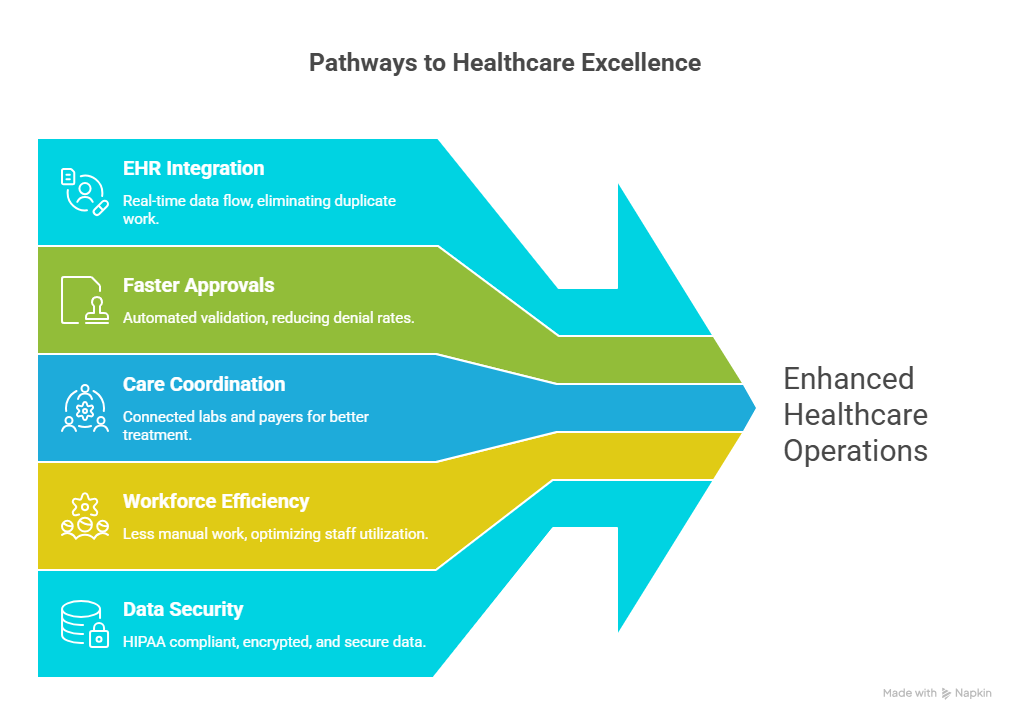
Real Time EHR Integration
EHR integration ensures that clinical data flows directly into claims workflows. Physicians do not need to duplicate documentation. This reduces administrative burden and allows more time for patient care.
Accurate and timely data also improves decision making. When clinicians can access claims history alongside medical records, they gain a clearer view of treatment patterns and outcomes.
Faster Approvals and Reduced Denials
Automated validation rules within healthcare claims management software identify errors before submission. This includes coding inconsistencies, missing documentation, and payer specific requirements.
Cleaner claims lead to faster approvals. This improves revenue cycles and ensures that care delivery is not disrupted due to financial uncertainty. For clinical teams, this stability allows better planning and continuity of care.
Improved Care Coordination
Healthcare interoperability connects claims systems with labs, pharmacies, and payer networks. This unified view helps care teams coordinate treatments more effectively.
For example, when prior authorization data is integrated into the workflow, clinicians can avoid delays in procedures or medications. This directly impacts patient outcomes.
Workforce Efficiency
Healthcare workforce management software integrated with claims systems helps allocate staff more effectively. Administrative teams spend less time on manual processing and more time on exception handling and patient support.
McKinsey reports that automation in healthcare administration can reduce operational costs by up to 30 percent. These savings can be redirected toward clinical resources and patient services.
Stronger Healthcare Data Security
HIPAA compliant software ensures that patient and claims data are protected at every stage. Advanced systems use encryption, role based access, and audit trails to maintain security.
For organizations handling large volumes of sensitive data, this is not optional. Data breaches can cost millions and damage patient trust. Secure claims platforms support both compliance and long term credibility.
A Practical Example from the US Market
A mid sized healthcare network in the US implemented an integrated healthcare IT solution combining claims management, EHR integration, and hospital workflow automation.
Before implementation
- Claim denial rate was 18 percent
- Average processing time was 21 days
- Clinical staff spent significant time on documentation corrections
After implementation
- Denial rate reduced to 7 percent within six months
- Processing time improved to 10 days
- Clinician documentation errors reduced by over 35 percent
The result was not just financial improvement. Physicians reported more time for patient interaction, and care teams experienced smoother coordination across departments.
Why Custom Solutions Are Gaining Preference
Large off the shelf platforms often provide standardized workflows. While they work for general use, they may not align with the specific needs of healthcare providers or insurers.
Custom healthcare claims management software offers several advantages
- Better alignment with clinical workflows
- Flexible EHR integration based on existing systems
- Enhanced healthcare interoperability across partners
- Stronger compliance mapping for HIPAA and FDA software compliance
- Scalability for enterprise level operations
This is where healthcare consulting firms play a key role. They design systems that fit the organization rather than forcing the organization to adapt to the software.
Aryabh Consulting Approach
Aryabh Consulting focuses on building user centric healthcare IT solutions that connect claims, clinical workflows, and compliance requirements.
Instead of offering generic platforms, the approach emphasizes
- Custom development aligned with real clinical processes
- Secure architectures supporting healthcare data security
- Integration ready systems for EHR and third party platforms
- Scalable infrastructure for large healthcare networks and insurers
Compared to large software vendors, this approach offers more control and adaptability. Organizations can evolve their systems as regulations and patient expectations change.
Comparison with Traditional Platforms
Traditional vendors often provide pre-built modules with limited flexibility. Customization can be expensive and slow.
In contrast, a consulting-driven model offers
Tailored workflows designed for specific clinical and operational needs
- Faster adaptation to regulatory updates
- Closer alignment between administrative and clinical team
- Improved long-term cost efficiency through reduced rework and better system utilization
For US-based healthcare organizations dealing with complex payer environments and compliance requirements, this flexibility is critical.
The Broader Impact on Healthcare Delivery
When claims systems are integrated and optimized, the benefits extend beyond administration
- Improved patient experience due to fewer delays
- Better clinical outcomes through accurate and timely data
- Reduced burnout among healthcare staff
- Stronger financial stability for providers
These factors contribute to a more resilient healthcare system.