- By ACI
- 23 December, 2025
- 8 min Read
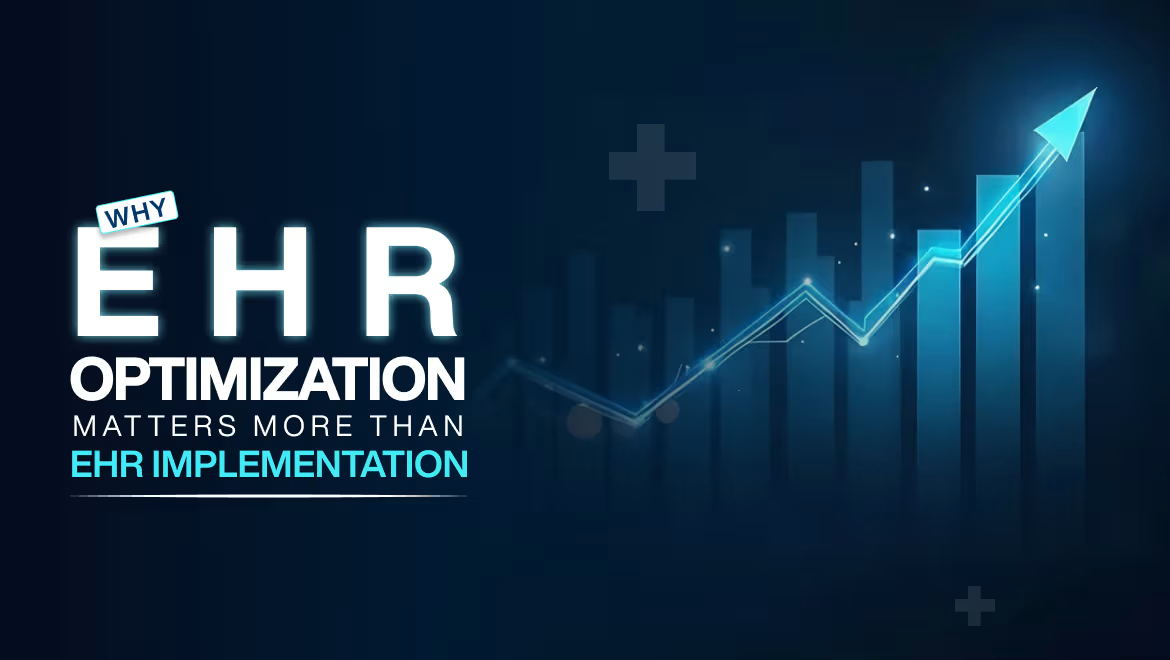
Why EHR Optimization Matters More Than EHR Implementation
Electronic Health Record systems have become a foundational component of modern healthcare operations. Over the last decade, hospitals and health systems across the United States have invested heavily in EHR implementation to meet regulatory requirements, support digital documentation, and improve care coordination. Yet many organizations find that even after successful implementation, clinical efficiency remains low, staff adoption is inconsistent, and operational frustration continues to grow.
This gap exists because EHR implementation is often treated as a finish line rather than a starting point. Implementation puts the system in place. Optimization determines whether the system actually works for clinicians, administrators, and patients over the long term.
For hospital executives and healthcare operations leaders, understanding this distinction is critical. EHR optimization is no longer optional. It is essential for sustainability, compliance, workforce retention, and secure healthcare delivery.
The Limits of EHR Implementation Alone
EHR implementation focuses on deployment. It ensures the system is installed, configured at a basic level, and meets initial regulatory requirements. While this phase is necessary, it is inherently limited.
Implementation typically prioritizes timelines, checklists, and go live milestones. Workflow design is often generalized. Clinical templates are deployed in standard formats. Decision support rules are enabled conservatively to avoid disruption. Integration with other systems may be functional but not efficient.
As a result, many organizations experience:
An implemented EHR that is not optimized can unintentionally increase operational risk and staff dissatisfaction. This is where optimization becomes a strategic necessity rather than a technical enhancement.
- Slow clinician adoption due to misaligned workflows
- Increased documentation time and reduced patient interaction
- Alert fatigue from poorly tuned clinical decision support
- Data silos caused by incomplete EHR integration
- Rising burnout among physicians nurses and administrative staff
EHR Optimization as an Operational Discipline
EHR optimization is the continuous process of aligning the EHR system with real clinical workflows operational needs and compliance obligations. It is not a one time project. It is an ongoing governance driven effort that evolves with care models regulations and organizational growth.
Optimization focuses on how the system is actually used day to day. It addresses friction points that implementation often overlooks.
Key areas of EHR optimization include:
- Workflow refinement across departments
- Role based template customization
- Clinical decision support tuning
- Interoperability improvement across care settings
- Data security reinforcement and compliance alignment
For healthcare leaders, optimization shifts the conversation from software ownership to system performance and trust.
Addressing Slow Adoption Through Workflow Alignment
One of the most common post implementation challenges is slow or inconsistent EHR adoption. This is rarely a training problem alone. In most cases, workflows embedded in the EHR do not reflect how care is actually delivered.
Clinicians are forced to adapt to the system rather than the system adapting to clinical reality. This leads to workarounds incomplete documentation and disengagement.
EHR optimization corrects this by:
- Specialty specific template redesign
- Removal of redundant fields
- Role based documentation views
- Improved data reuse across encounters
By reducing documentation friction, EHR optimization directly supports workforce sustainability. This is not just a clinical concern. It is a strategic issue for hospital leadership.
Clinical Decision Support That Supports Care
Clinical decision support is one of the most powerful features of an EHR system. It is also one of the most misused.
During implementation, decision support rules are often generic. Alerts are enabled broadly to meet compliance requirements. Over time this creates alert fatigue. Clinicians begin to ignore prompts that were intended to improve safety and quality.
Optimization refines clinical decision support by:
- Aligning alerts with real risk scenarios
- Reducing low value notifications
- Supporting evidence based care pathways
- Integrating decision support into workflow rather than interrupting it
Effective decision support enhances care quality without adding cognitive burden. This requires ongoing tuning and governance, not a one time configuration.
EHR Integration and Interoperability as Optimization Priorities
Healthcare interoperability is a regulatory and operational imperative. Yet many organizations treat integration as a technical checkbox during implementation.
True interoperability requires more than data exchange. It requires data consistency context and usability across systems.
EHR optimization improves healthcare interoperability by:
- Streamlining interfaces with labs imaging systems and external providers
- Improving data normalization and mapping
- Ensuring continuity of care across settings
- Supporting population health and reporting initiatives
Optimized EHR integration also strengthens healthcare IT solutions by reducing manual work and minimizing data errors that create downstream risk.
Healthcare Data Security and Compliance Are Ongoing Responsibilities
HIPAA compliant software is not achieved at go live. Healthcare data security is a continuous responsibility that must evolve with threats regulations and system changes. Similarly FDA software compliance requirements increasingly apply to digital health functions clinical support tools and connected devices. These obligations do not end after implementation.
EHR optimization supports compliance by:
- Reviewing access controls and role based permissions
- Strengthening audit logging and monitoring
- Ensuring secure data flows across integrated systems
- Aligning system behavior with HIPAA FDA and interoperability standards
For healthcare executives, this ongoing optimization reduces regulatory exposure and builds institutional trust.
Why Optimization Requires Healthcare Consulting Expertise
EHR optimization is not purely technical. It sits at the intersection of clinical operations compliance and technology. This is why healthcare consulting plays a critical role. Effective optimization requires an understanding of healthcare regulations clinical workflows data governance and system architecture. Aryabh Consulting approaches EHR optimization as a long term partnership rather than a transactional service. By combining healthcare IT solutions with regulatory awareness and integration expertise, ACI supports hospitals and health systems in building EHR environments that are secure compliant and usable.
Vendor neutral by design, Aryabh Consulting focuses on:
- Secure EHR integration across complex ecosystems
- HIPAA compliant software design and optimization
- FDA aware governance for clinical digital systems
- Long term optimization strategies aligned with organizational goals
This balanced approach allows healthcare organizations to evolve their EHR systems without disruption or vendor dependency.
From Implementation to Optimization Maturity
Healthcare organizations that succeed with EHRs do not stop at implementation. They invest in optimization maturity.
This maturity includes:
- Continuous performance monitoring
- Governance driven system updates
- Ongoing clinician feedback loops
- Proactive compliance and security reviews
Optimization transforms the EHR from a documentation system into a strategic healthcare platform.