The Rise of Telemedicine Platforms The Rise of Telemedicine Platforms
  • By
  • 01 January, 1970
  • 1 min Read

This article is intended solely as a technical overview based on our insights and understanding of current technology trends. It does not promote, endorse, or represent any specific company, product, or individual. The content is purely informational and reflects our independent perspective on the subject.
1

Related Blogs

How Education Software Solutions Support Students Through Data-Driven Personalization
Education Software Solution

How Education Software Solutions Support Students Through Data-Driven Personalization

By ACI 10 min Read

Across the United States, educators and administrators are facing a persistent challenge: students are entering classrooms with vastly different academic levels, learning styles, emotional readiness, and external constraints. Traditional, one-size-fits-all instruction struggles to keep pace with this complexity. The consequences are measurable—rising absenteeism, widening achievement gaps, and dropout risks that disproportionately affect already vulnerable learners. According to the National Center for Education Statistics (NCES), nearly 1 in 5 U.S. high school students does not graduate on time, and early academic disengagement often begins years before dropout becomes visible. At the same time, McKinsey research shows that students in the bottom academic quartile can fall behind by more than a full grade level within a single academic year if learning gaps are not addressed early. Education software solutions built on data-driven personalization are increasingly positioned as a structural response to these challenges. Rather than replacing teachers, modern AI student development software in the USA is designed to augment instructional decision-making, identify risk early, and deliver individualized learning support at scale. Why Standardized Instruction Is No Longer Sufficient? Classrooms today are more diverse than ever—not only culturally, but cognitively. Students differ in: Prior knowledge and academic readiness Preferred learning modalities (visual, auditory, kinesthetic) Pace of comprehension Attendance consistency Language proficiency Socio-emotional factors Yet many instructional models still assume a uniform baseline. This mismatch creates predictable outcomes. Research from the RAND Corporation indicates that teachers spend up to 50 percent of instructional time re-teaching material that some students already understand while others remain lost. Over time, this dynamic contributes to disengagement on both ends of the spectrum. Digital learning software in the USA, when designed around adaptive intelligence rather than static content delivery, offers a path forward—one that begins with accurate diagnosis. The Role of Baseline Assessment in Personalized Learning Effective personalization does not begin with content. It begins with measurement. Modern learning support software for schools in the USA incorporates diagnostic assessments that evaluate where each student currently stands across multiple dimensions, including: Subject mastery and skill gaps Learning pace and retention patterns Engagement behavior and task completion Response to different content formats Unlike traditional placement tests, these assessments are continuous rather than one-time. They evolve as students interact with the system, allowing the software to recalibrate learning pathways in real time. A study published by the Bill & Melinda Gates Foundation found that schools using adaptive diagnostic tools identified learning gaps up to 30 percent earlier than schools relying on periodic standardized testing alone. Early identification is critical, particularly for students at risk of chronic absenteeism or academic disengagement. Addressing Learning Style Differences Through Adaptive Design Not all students process information the same way. While the concept of rigid “learning styles” is often oversimplified, there is strong evidence that multi-modal instruction improves comprehension and retention, especially when aligned with individual student preferences. Advanced AI tutoring platforms for schools use interaction data—not assumptions—to determine how students learn best. For example: Visual learners may receive diagram-based explanations, infographics, and interactive simulations Auditory learners may engage with narrated lessons, guided walkthroughs, or verbal feedback loops Sequential learners may be guided through step-by-step progression, while others explore concept maps According to a 2023 EdTech Evidence Exchange report, students using adaptive, multi-modal learning platforms demonstrated a 22 percent improvement in concept mastery compared to peers using static digital curricula. The value lies not in labeling students, but in dynamically responding to how they engage and succeed. Combating Absenteeism With Predictive Analytics Absenteeism is both a symptom and a cause of academic failure. The U.S. Department of Education reports that approximately 16 percent of K-12 students are chronically absent, missing at least 10 percent of the school year. These patterns often go unnoticed until performance drops significantly. Data-driven education software identifies absenteeism risk earlier by analyzing behavioral signals such as: Missed assignments Declining engagement metrics Irregular login patterns Sudden changes in performance consistency Predictive models can flag students who are likely to disengage weeks before traditional indicators appear. This allows educators and counselors to intervene proactively—through targeted support, adjusted workloads, or personalized pacing—rather than reactively. Schools that implemented predictive analytics within their school software ecosystems in the USA reported attendance improvements of 8–12 percent within a single academic year, according to a longitudinal study by the American Institutes for Research. Personalized Task Assignment and Goal Alignment Once a student’s current academic scenario is clearly understood, the next step is targeted action. Effective AI student development software in the USA does not overwhelm learners with generic remediation. Instead, it assigns: Tasks aligned to immediate skill gaps Difficulty levels calibrated to challenge without discouragement Milestones connected to short-term and long-term academic goals This approach reflects principles from cognitive science, particularly the concept of “desirable difficulty,” where learning is optimized when tasks are neither too easy nor excessively complex. A Stanford Graduate School of Education study found that students receiving personalized task sequencing completed 35 percent more learning modules than peers on uniform curricula, with significantly higher retention rates. Supporting Teachers With Actionable Intelligence One of the most overlooked benefits of education software personalization is its impact on educators themselves. Teachers are not replaced by data—they are empowered by it. Modern school software in the USA translates raw student data into actionable insights, such as: Which students need immediate intervention Which concepts are consistently misunderstood Which instructional formats are most effective for specific groups This reduces administrative overhead and enables teachers to focus on instruction, mentoring, and relationship-building—areas where human judgment is irreplaceable. The Learning Policy Institute reports that teachers using data-driven instructional tools saved an average of 6–8 hours per week previously spent on manual assessment and planning. Closing Educational Gaps at Scale Educational inequity remains one of the most pressing issues in the U.S. system. Students from low-income households, English language learners, and those with learning differences are statistically more likely to fall behind. Data-driven personalization helps level the playing field by ensuring that support is based on need, not visibility. Quiet students, struggling students, or those without external advocacy are less likely to be overlooked when software continuously monitors progress. A multi-district analysis published in Education Week showed that schools using adaptive learning platforms reduced achievement gaps in math and reading by up to 18 percent over two academic years. The Future of Student-Centered Education Software As AI capabilities mature, the focus of education technology is shifting from automation to precision support. The most effective digital learning software in the USA is not defined by flashy features, but by its ability to: Understand each learner’s current reality Adjust instruction dynamically Support educators with clarity, not complexity Drive measurable, equitable outcomes Data-driven personalization is no longer a future concept. It is rapidly becoming a baseline expectation for schools that aim to reduce dropout rates, improve engagement, and help students achieve meaningful academic goals. Where Data-Driven Personalization Meets Real-World Implementation While data-driven personalization is widely discussed, its real value depends on how effectively it is implemented within existing educational ecosystems. This is where many schools and institutions face friction—legacy systems, fragmented data sources, compliance constraints, and limited internal technical capacity often prevent personalization strategies from delivering measurable outcomes. Aryabh Consulting Inc. approaches education software development from an implementation-first perspective. Rather than offering generic learning platforms, ACI focuses on building custom education software solutions that align with how schools, districts, and academic organizations actually operate. The emphasis is on integrating assessment intelligence, adaptive learning logic, and student engagement analytics into cohesive systems that educators can trust and use at scale. ACI’s approach to AI student development software in the USA prioritizes three foundational principles: Context-aware personalization: Learning pathways are designed around a student’s current academic scenario, engagement patterns, and progression history—ensuring interventions are timely, relevant, and sustainable. Actionable intelligence for educators: Instead of overwhelming teams with dashboards, ACI-designed platforms translate learning data into clear instructional signals, helping teachers and administrators intervene with precision. Scalability with accountability: Whether supporting a single institution or a multi-school environment, ACI ensures that personalization logic remains consistent, auditable, and aligned with institutional goals. By combining adaptive learning models with disciplined software engineering, ACI enables schools to move beyond theory and into practical, data-backed student support systems. The result is education software that does not merely deliver content, but actively supports retention, engagement, and long-term academic progress. Building Sustainable, Student-Centered Learning Systems The challenges facing today’s education system—dropout risk, absenteeism, uneven academic progress, and diverse learning needs—are not isolated problems. They are interconnected outcomes of instructional models that were never designed to adapt at scale. Data-driven personalization offers a practical, evidence-based path forward by allowing schools to understand where students are, respond to how they learn, and support them with precision over time. Education software that continuously assesses, adapts, and guides learning does more than improve test scores. It strengthens engagement, reduces preventable learning loss, and creates an environment where students receive support aligned with their individual goals and realities. For institutions, this translates into clearer visibility, earlier intervention, and more accountable outcomes. For schools and educational organizations evaluating how to modernize their digital learning infrastructure, the focus should not be on adopting technology for its own sake, but on building systems that deliver measurable student impact. Aryabh Consulting Inc. works with education stakeholders to design and implement data-driven learning platforms that support long-term academic development while fitting seamlessly into existing operational frameworks. As student expectations evolve and educational accountability increases, institutions that invest in intelligent, adaptable learning systems will be better positioned to support every learner—not just those who already fit the traditional model. We love to hear from you Contact Us
Why Modern Healthcare Organizations Need Tailored Healthcare Solutions
Healthcare IT & Digital Transformation

Why Modern Healthcare Organizations Need Tailored Healthcare Solutions

By ACI 9 min Read

Healthcare organizations across the United States are operating in an environment defined by rising patient expectations, regulatory pressure, workforce shortages, and growing operational complexity. Providers and enterprise healthcare systems are expected to deliver high-quality care while managing compliance, cost controls, data security, and increasingly fragmented digital ecosystems. In this context, technology is no longer a support function. It is a core operational backbone. Yet many hospitals and healthcare systems continue to rely on generic healthcare IT software that was never designed to reflect their real clinical workflows, administrative structures, or compliance realities. This disconnect is one of the primary reasons healthcare organizations struggle with inefficiency, clinician burnout, and underperforming EHR systems. Modern healthcare organizations need tailored healthcare solutions because care delivery itself is not standardized. Technology must adapt to healthcare operations, not the other way around. The Operational Reality Facing Providers and Enterprise Healthcare Systems Healthcare delivery in the USA has become significantly more complex over the last decade. According to industry studies, physicians now spend close to half of their working hours on administrative and documentation tasks rather than direct patient care. EHR-related inefficiencies are consistently cited as a leading contributor to clinician burnout and staff attrition. At the enterprise level, healthcare systems face additional challenges: Multi-location operations with inconsistent workflows Legacy systems that do not communicate effectively Increasing reporting and audit requirements Security and privacy risks tied to sensitive patient data Pressure to improve outcomes while reducing operational costs Technology is expected to solve these problems. In practice, generic healthcare IT software often amplifies them. Why Generic Healthcare IT Software Fails in Modern Healthcare Environments Most off-the-shelf healthcare platforms are designed for broad market adoption. They prioritize standardized features over workflow alignment. While this approach simplifies distribution, it creates significant limitations for real-world healthcare operations. Common issues include: Rigid workflows that force clinicians to adapt their processes to the system Limited flexibility in reporting and analytics Poor interoperability with existing EHRs and legacy systems Compliance controls added as afterthoughts rather than built-in safeguards For providers and hospitals, these limitations translate into longer documentation times, data inconsistencies, and increased operational risk. For enterprise healthcare systems, they lead to fragmented technology stacks, escalating maintenance costs, and long-term technical debt. What Tailored Healthcare Solutions Actually Mean Tailored healthcare solutions are often misunderstood as simple configuration or interface customization. In reality, they represent a fundamentally different approach to healthcare IT software design. A tailored healthcare solution is built around how an organization operates, not around a fixed feature set. This includes: Workflow-driven system architecture Custom logic for clinical, administrative, and compliance processes Integration strategies aligned with existing systems Scalability that supports organizational growth and regulatory change True tailoring requires more than software licensing. It requires healthcare software development services that begin with operational discovery and continue through long-term system evolution. EHR Optimization as a Core Requirement, Not an Enhancement Electronic Health Records are central to modern healthcare operations, yet many organizations struggle to extract real value from their EHR investments. The issue is rarely the EHR platform itself. It is how the system is implemented, integrated, and optimized. EHR optimization focuses on aligning the system with real clinical workflows. This includes: Reducing duplicate data entry Streamlining documentation processes Improving data accuracy and accessibility Enhancing interoperability across systems Studies consistently show that optimized EHR workflows reduce administrative burden and improve clinician satisfaction. EHR optimized software enables care teams to focus on patients rather than interfaces, while giving leadership better visibility into operational performance. For enterprise, EHR optimized Healthcare systems also supports standardized reporting, audit readiness, and data-driven decision-making across departments and locations. The Hidden Costs of Non-Optimized Healthcare IT Systems The impact of poorly aligned healthcare IT software extends far beyond inconvenience. It carries measurable financial and operational consequences. These include: Lost productivity due to inefficient workflows Increased staffing costs driven by burnout and turnover Revenue leakage from documentation errors and delayed billing Higher compliance risk and audit exposure Research indicates that clinician burnout costs healthcare organizations billions annually through turnover and reduced productivity. Technology friction is a significant contributor. Tailored healthcare solutions directly address these hidden costs by eliminating systemic inefficiencies. HIPAA Compliance Must Be Built Into System Design HIPAA compliance is often treated as a checklist rather than an engineering discipline. In many generic healthcare systems, compliance controls are layered onto existing workflows instead of being designed into the system architecture. Tailored healthcare solutions take a different approach: Role-based access controls aligned with real responsibilities Secure data handling embedded in workflows Comprehensive audit trails designed for regulatory review System logic that minimizes human error By integrating HIPAA compliance into the foundation of healthcare IT software, organizations reduce risk while improving usability. Compliance becomes part of daily operations rather than an ongoing remediation effort. Why US Healthcare Organizations Need Purpose-Built Healthcare IT Software Healthcare IT software in the USA must operate within a unique regulatory and operational environment. Federal and state regulations, payer requirements, and interoperability mandates create complexity that generic platforms are not designed to manage effectively. Tailored healthcare solutions allow organizations to: Address region-specific compliance requirements Integrate payer and provider systems seamlessly Adapt to policy and reimbursement changes without system overhauls For providers and enterprise healthcare systems, this adaptability is essential for long-term sustainability. The Strategic Value of Partnering With a Healthcare Software Development Company Technology outcomes in healthcare are strongly influenced by who builds and supports the system. A healthcare software development USA company brings domain expertise, technical depth, and long-term accountability that generic vendors cannot offer. Effective healthcare software development services include: Workflow analysis and system discovery Custom development aligned with operational goals Security and compliance-first architecture Ongoing optimization and scalability planning This partnership model ensures technology evolves alongside the organization rather than becoming obsolete. How Aryabh Consulting Inc. Approaches Tailored Healthcare Solutions Aryabh Consulting Inc. works with healthcare organizations as a strategic technology partner. The focus is not on deploying generic platforms, but on designing healthcare IT software that reflects how providers and enterprise systems actually operate. ACI’s approach emphasizes: User-centric system design grounded in healthcare workflows Tailored EHR optimization strategies Compliance-aligned development practices Scalable solutions built for long-term use By combining consulting-led discovery with custom development, ACI enables healthcare organizations to build systems that support care delivery, operational efficiency, and regulatory confidence. Real-World Application of Tailored Healthcare Solutions Tailored healthcare IT solutions are applied across a wide range of scenarios, including: Workflow optimization for multi-location hospital networks Custom dashboards for compliance and operational reporting Secure patient engagement platforms Interoperability solutions connecting EHRs and legacy systems These solutions are designed to solve specific organizational problems rather than forcing organizations into predefined molds. The Future of Healthcare IT Is Tailored and Adaptive Healthcare technology is moving toward systems that are intelligent, adaptive, and deeply aligned with clinical and operational realities. Organizations that invest in tailored healthcare solutions are better positioned to adopt emerging capabilities while maintaining stability and compliance. EHR optimization, data-driven workflows, and scalable system design will define the next phase of healthcare IT maturity in the USA. Why Tailored Healthcare Solutions Are Now a Strategic Imperative Modern healthcare organizations cannot afford technology that slows them down. Tailored healthcare solutions enable providers and enterprise systems to operate efficiently, comply confidently, and deliver better patient outcomes. For organizations evaluating the best healthcare IT software in the USA, the question is no longer whether customization is necessary. The question is whether their technology truly reflects how they deliver care. Strategic partnerships with experienced healthcare software development companies allow organizations to move beyond limitations and build systems designed for the realities of modern healthcare. We love to hear from you Contact Us

Why EHR Optimization Matters More Than EHR Implementation
Healthcare IT & Digital Transformation

Why EHR Optimization Matters More Than EHR Implementation

By ACI 8 min Read

Electronic Health Record systems have become a foundational component of modern healthcare operations. Over the last decade, hospitals and health systems across the United States have invested heavily in EHR implementation to meet regulatory requirements, support digital documentation, and improve care coordination. Yet many organizations find that even after successful implementation, clinical efficiency remains low, staff adoption is inconsistent, and operational frustration continues to grow. This gap exists because EHR implementation is often treated as a finish line rather than a starting point. Implementation puts the system in place. Optimization determines whether the system actually works for clinicians, administrators, and patients over the long term. For hospital executives and healthcare operations leaders, understanding this distinction is critical. EHR optimization is no longer optional. It is essential for sustainability, compliance, workforce retention, and secure healthcare delivery. The Limits of EHR Implementation Alone EHR implementation focuses on deployment. It ensures the system is installed, configured at a basic level, and meets initial regulatory requirements. While this phase is necessary, it is inherently limited. Implementation typically prioritizes timelines, checklists, and go live milestones. Workflow design is often generalized. Clinical templates are deployed in standard formats. Decision support rules are enabled conservatively to avoid disruption. Integration with other systems may be functional but not efficient. As a result, many organizations experience: An implemented EHR that is not optimized can unintentionally increase operational risk and staff dissatisfaction. This is where optimization becomes a strategic necessity rather than a technical enhancement. Slow clinician adoption due to misaligned workflows Increased documentation time and reduced patient interaction Alert fatigue from poorly tuned clinical decision support Data silos caused by incomplete EHR integration Rising burnout among physicians nurses and administrative staff EHR Optimization as an Operational Discipline EHR optimization is the continuous process of aligning the EHR system with real clinical workflows operational needs and compliance obligations. It is not a one time project. It is an ongoing governance driven effort that evolves with care models regulations and organizational growth. Optimization focuses on how the system is actually used day to day. It addresses friction points that implementation often overlooks. Key areas of EHR optimization include: Workflow refinement across departments Role based template customization Clinical decision support tuning Interoperability improvement across care settings Data security reinforcement and compliance alignment For healthcare leaders, optimization shifts the conversation from software ownership to system performance and trust. Addressing Slow Adoption Through Workflow Alignment One of the most common post implementation challenges is slow or inconsistent EHR adoption. This is rarely a training problem alone. In most cases, workflows embedded in the EHR do not reflect how care is actually delivered. Clinicians are forced to adapt to the system rather than the system adapting to clinical reality. This leads to workarounds incomplete documentation and disengagement. EHR optimization corrects this by: Specialty specific template redesign Removal of redundant fields Role based documentation views Improved data reuse across encounters By reducing documentation friction, EHR optimization directly supports workforce sustainability. This is not just a clinical concern. It is a strategic issue for hospital leadership. Clinical Decision Support That Supports Care Clinical decision support is one of the most powerful features of an EHR system. It is also one of the most misused. During implementation, decision support rules are often generic. Alerts are enabled broadly to meet compliance requirements. Over time this creates alert fatigue. Clinicians begin to ignore prompts that were intended to improve safety and quality. Optimization refines clinical decision support by: Aligning alerts with real risk scenarios Reducing low value notifications Supporting evidence based care pathways Integrating decision support into workflow rather than interrupting it Effective decision support enhances care quality without adding cognitive burden. This requires ongoing tuning and governance, not a one time configuration. EHR Integration and Interoperability as Optimization Priorities Healthcare interoperability is a regulatory and operational imperative. Yet many organizations treat integration as a technical checkbox during implementation. True interoperability requires more than data exchange. It requires data consistency context and usability across systems. EHR optimization improves healthcare interoperability by: Streamlining interfaces with labs imaging systems and external providers Improving data normalization and mapping Ensuring continuity of care across settings Supporting population health and reporting initiatives Optimized EHR integration also strengthens healthcare IT solutions by reducing manual work and minimizing data errors that create downstream risk. Healthcare Data Security and Compliance Are Ongoing Responsibilities HIPAA compliant software is not achieved at go live. Healthcare data security is a continuous responsibility that must evolve with threats regulations and system changes. Similarly FDA software compliance requirements increasingly apply to digital health functions clinical support tools and connected devices. These obligations do not end after implementation. EHR optimization supports compliance by: Reviewing access controls and role based permissions Strengthening audit logging and monitoring Ensuring secure data flows across integrated systems Aligning system behavior with HIPAA FDA and interoperability standards For healthcare executives, this ongoing optimization reduces regulatory exposure and builds institutional trust. Why Optimization Requires Healthcare Consulting Expertise EHR optimization is not purely technical. It sits at the intersection of clinical operations compliance and technology. This is why healthcare consulting plays a critical role. Effective optimization requires an understanding of healthcare regulations clinical workflows data governance and system architecture. Aryabh Consulting approaches EHR optimization as a long term partnership rather than a transactional service. By combining healthcare IT solutions with regulatory awareness and integration expertise, ACI supports hospitals and health systems in building EHR environments that are secure compliant and usable. Vendor neutral by design, Aryabh Consulting focuses on: Secure EHR integration across complex ecosystems HIPAA compliant software design and optimization FDA aware governance for clinical digital systems Long term optimization strategies aligned with organizational goals This balanced approach allows healthcare organizations to evolve their EHR systems without disruption or vendor dependency. From Implementation to Optimization Maturity Healthcare organizations that succeed with EHRs do not stop at implementation. They invest in optimization maturity. This maturity includes: Continuous performance monitoring Governance driven system updates Ongoing clinician feedback loops Proactive compliance and security reviews Optimization transforms the EHR from a documentation system into a strategic healthcare platform. Closing Perspective EHR implementation delivers access. EHR optimization delivers value. For hospital executives and healthcare administrators, the question is no longer whether the EHR is live. The question is whether it truly supports care delivery operational efficiency and regulatory confidence. By prioritizing EHR optimization, healthcare organizations can reduce burnout improve adoption strengthen data security and meet evolving compliance demands. With the right healthcare consulting partner, optimization becomes a sustainable advantage rather than a recurring challenge. Aryabh Consulting Inc. supports modern US healthcare organizations in navigating this transition with clarity security and long term trust. We love to hear from you Contact Us

Understanding the 7 Key Components of IT Infrastructure Management
Remote IT Infrastructure Management

Understanding the 7 Key Components of IT Infrastructure Management

By ACI 10 min Read

For business and organizational decision makers, technology infrastructure is no longer a background utility. It is a core operational asset that affects continuity, security, customer experience, and long term growth. As organizations expand across locations, adopt cloud services, and automate business processes, the need for disciplined IT infrastructure management becomes unavoidable. IT infrastructure management refers to the coordinated oversight of hardware, software, networks, data, cloud environments, security controls, and the people and processes that keep these elements reliable. When managed well, infrastructure supports strategic objectives. When neglected, it introduces risk, downtime, and cost uncertainty. This article explains the seven key components of IT infrastructure management, how they work together, and why the role of IT infrastructure management is central to modern enterprises. It also outlines how organizations are using automation and AI in IT infrastructure management to improve visibility, resilience, and decision making. What IT Infrastructure Management Means for Modern Organizations IT infrastructure management is the practice of maintaining and optimizing the systems that run daily operations. It goes beyond basic technical support. It includes planning, governance, monitoring, security, and continuous improvement across the entire technology stack. For decision makers, effective IT infrastructure management delivers three outcomes. Stability through consistent system availability. Security through controlled access and risk reduction. Agility through scalable platforms that support new initiatives without disruption. Without a structured approach, infrastructure becomes fragmented. Teams rely on reactive fixes. Visibility is limited. Costs increase as systems age without clear lifecycle planning. This is why many organizations now treat infrastructure management as a strategic discipline rather than a purely technical function. The 7 Key Components of IT Infrastructure Management 1. Hardware Platforms Hardware platforms form the physical foundation of the IT environment. This includes servers, desktops, laptops, storage devices, and networking equipment such as routers and switches. While many workloads have moved to the cloud, physical hardware remains critical in offices, data centers, and hybrid environments. Effective IT infrastructure management ensures hardware assets are tracked, maintained, and replaced based on usage and risk. Capacity planning prevents performance bottlenecks. Redundancy reduces downtime. Clear lifecycle policies help organizations avoid unexpected failures that disrupt business operations. 2. Software Platforms Software platforms include operating systems, middleware, and enterprise applications that support business functions. Examples include Windows or Linux environments, database systems, ERP platforms, and collaboration tools. Managing software platforms requires consistent patching, version control, and compatibility planning. Outdated software introduces security vulnerabilities and operational risk. Strong IT infrastructure management aligns software platforms with business workflows so systems support how teams actually work rather than forcing inefficient workarounds. 3. Network Infrastructure Network infrastructure connects users, systems, and data across locations. It includes wired and wireless networks, firewalls, gateways, and internet connectivity. Network reliability directly affects productivity, application performance, and security posture. From an infrastructure management perspective, networks must be monitored continuously. Bandwidth usage, latency, and access patterns need visibility. Secure segmentation and controlled access reduce exposure to threats. As organizations adopt remote and hybrid work models, network infrastructure becomes even more central to daily operations. 4. Data Storage and Management Data is one of the most valuable assets an organization owns. Data storage and management covers databases, file systems, backups, and recovery mechanisms across on premise and cloud environments. Strong IT infrastructure management ensures data is accessible, protected, and recoverable. Backup strategies are tested regularly. Storage capacity is planned based on growth trends. Governance controls define who can access sensitive information. Poor data management increases the risk of loss, regulatory exposure, and operational disruption. 5. Cloud Services Cloud services have become a core component of modern infrastructure. Organizations use public, private, or hybrid cloud environments to host applications, store data, and scale resources on demand. Managing cloud services requires discipline. Cost visibility, workload performance, security controls, and integration with on premise systems must be actively governed. Effective IT infrastructure management treats cloud environments as part of a unified ecosystem rather than isolated platforms. For decision makers, the value of cloud adoption depends on how well these environments are managed over time. Without oversight, cloud complexity and cost can grow quickly. 6. Security Security spans every layer of the infrastructure. It includes firewalls, endpoint protection, identity and access controls, monitoring tools, and security policies. As threat activity increases across industries, security can no longer be treated as an afterthought. The role of IT infrastructure management includes embedding security into daily operations. Access is granted based on role. Systems are monitored for unusual activity. Vulnerabilities are addressed through structured processes. A strong security posture protects not only systems but also business reputation and trust. IT Service Management People and Processes Technology does not manage itself. IT service management represents the people and processes responsible for operating the infrastructure. This includes service desks, incident response, change management, disaster recovery planning, and ongoing optimization. Well defined processes reduce downtime and confusion during incidents. Clear ownership ensures accountability. For decision makers, this component often determines whether infrastructure investments deliver long term value or degrade over time. Management Focus Areas That Sustain Infrastructure Performance 1. Monitoring and Maintenance Continuous monitoring is a cornerstone of IT infrastructure management. Proactive checks identify issues before they affect users. Performance metrics provide insight into capacity trends. Preventive maintenance reduces the likelihood of unplanned outages. Organizations that invest in monitoring gain predictability. They can plan upgrades, allocate budgets, and support growth with fewer disruptions. 2. Security and Business Continuity Infrastructure resilience depends on preparation. Business continuity planning ensures systems can recover from failures, cyber incidents, or natural disruptions. Backup and recovery processes are tested regularly. Failover mechanisms are documented and understood. This focus area highlights the role of IT infrastructure management in protecting revenue and operations during unexpected events. 3. Automation and Intelligent Operations Automation reduces manual effort and improves consistency across infrastructure tasks. Routine activities such as provisioning, patching, and configuration management can be automated to reduce error and response time. Many organizations are now introducing AI in IT infrastructure management. AI driven tools analyze logs, detect anomalies, predict capacity needs, and prioritize incidents. This does not replace human oversight. It augments decision making and allows IT teams to focus on higher value initiatives. 4. The Strategic Role of IT Infrastructure Management For business leaders, the role of IT infrastructure management extends beyond uptime. It supports scalability, compliance, and innovation. Infrastructure decisions affect how quickly new services can be launched, how securely data is handled, and how efficiently teams collaborate. When infrastructure is managed as a cohesive system, organizations gain control. They reduce technical debt. They improve planning accuracy. They align technology investments with business priorities. This strategic role becomes even more important as organizations adopt automation, integrate external partners, and rely on data driven decision making. Why Organizations Partner With Aryabh Consulting Aryabh Consulting Inc. approaches IT infrastructure management as a long term enterprise responsibility rather than a one time implementation. Our focus is on building user centric, scalable systems that support real business operations. As an authoritative enterprise software management provider, Aryabh Consulting helps organizations design, manage, and optimize infrastructure across hardware, software, cloud, and security layers. We emphasize clarity, governance, and operational discipline. What differentiates our approach is post care. We provide ongoing monitoring and optimization, long term support, and SLA driven maintenance. Infrastructure environments evolve. Our engagement model ensures systems continue to perform as business needs change. For decision makers seeking a reliable enterprise partner, Aryabh Consulting delivers structure, accountability, and sustained value. Frequently Asked Questions 1. What is IT infrastructure management in simple terms IT infrastructure management is the practice of managing the hardware, software, networks, data, and cloud systems that support daily business operations. It ensures these components work together reliably, securely, and efficiently. 2. Why is IT infrastructure management important for decision makers For decision makers, IT infrastructure management reduces operational risk, improves system availability, and provides better cost control. It directly supports business continuity, compliance, and long term scalability. 3. What is the role of IT infrastructure management in business growth The role of IT infrastructure management is to create a stable foundation that allows organizations to scale operations, adopt new technologies, and respond quickly to market changes without disruption. 4. How does AI help in IT infrastructure management AI in IT infrastructure management helps analyze system data, detect anomalies, predict capacity needs, and prioritize incidents. It improves visibility and decision making while reducing manual effort. 5. What are the biggest challenges in managing IT infrastructure Common challenges include legacy systems, limited visibility, security risks, rising cloud costs, and reactive maintenance. These issues often arise when infrastructure lacks standardization and continuous oversight. 6. How does ongoing monitoring and support improve infrastructure performance Ongoing monitoring and SLA driven support help identify issues early, optimize performance, and maintain system reliability over time. Continuous optimization ensures infrastructure continues to align with evolving business needs. Conclusion Understanding the seven key components of IT infrastructure management provides a clear framework for building stable and secure technology environments. Hardware, software, networks, data, cloud services, security, and service management must be treated as interconnected elements. The role of IT infrastructure management is to bring these elements together under consistent governance. With the addition of automation and AI in IT infrastructure management, organizations can move from reactive support to predictive and strategic operations. For businesses and organizations planning long term growth, disciplined infrastructure management is not optional. It is the foundation on which reliability, security, and innovation are built. We love to hear from you Contact Us

Why Organizations Are Moving From Generic Tools to Custom Workflow Software
Digital Transformation

Why Organizations Are Moving From Generic Tools to Custom Workflow Software

By ACI 9 min Read

Organizations across the United States are under constant pressure to operate with more accuracy, more clarity, and less friction. Many teams rely on generic software tools to manage tasks, communication, and operational workflows. These tools work well for simple needs. They often fail when operations expand, when compliance becomes complex, or when teams require systems that match their real processes. This is why more businesses are shifting to user-centric workflow software. They want software that reflects how they work, not the other way around. The shift is especially strong in enterprise IT environments where teams manage large workloads, multi-department operations, and strict security requirements. Leaders want systems that improve efficiency, support digital transformation, and give them more control over their data. They also want solutions that scale without disruption. Custom software development has become a direct answer to these needs. It gives organizations full ownership, better security, and a long-term foundation for growth. Aryabh Consulting Inc. supports this shift with custom workflow platforms built through a user first approach. The firm combines enterprise software solutions, secure software engineering, API driven integrations, and lifecycle support with SLA backed commitments. This combination allows organizations to upgrade their operations with confidence. The Limits of Generic Tools for Enterprise Operations Generic tools are attractive because they are fast to set up and easy to test. Once organizations expand beyond small teams, these tools introduce friction. They create gaps that slow down operations and increase dependency on manual work. Common limitations include: Poor fit for real workflows Enterprise workflows are often complex. They involve multiple approvals, conditional routing, and data checks. Generic tools follow fixed templates that cannot adapt to real business rules. As a result, teams build workarounds through emails and spreadsheets. This makes processes slower and harder to monitor. Limited integration capabilities Enterprise IT environments depend on different systems for HR, finance, customer data, field operations, and compliance. Most generic platforms cannot integrate deeply with legacy systems, internal APIs, or custom databases. This creates isolated workflows that reduce visibility and accuracy. Security and data control concerns Generic platforms often manage data on shared cloud environments with broad access layers. Enterprise teams require secure software with reliable governance, clear access rules, and strong encryption. They also need workflows that support compliance frameworks. This is not possible with one size fits all tools. Lack of scalability Many tools slow down or fail when user volume increases. Enterprise organizations need scalable software that supports peak workloads and multi-region usage without performance drop. Limited ownership Businesses depend on the vendor’s roadmap. If the vendor changes features or pricing, the organization has little control. Custom workflow software removes this dependency. These challenges show why many organizations start with generic tools but later outgrow them. The need for predictable operations becomes stronger as they scale. Why Custom Workflow Software Has Become the Preferred Choice Custom workflow software development gives organizations a system that aligns with their work style, security priorities, and long-term digital strategy. It avoids the restrictions of generic platforms and offers these advantages. Workflows designed for the organization Custom software supports real tasks, real approval steps, real roles, and real data paths. It matches how teams already operate. It reduces training needs because users understand the flow immediately. This helps organizations streamline processes without forcing behavioral change. Scalable architecture Custom workflows are built on architectures that support growth. Businesses can expand to new departments, add new rules, or introduce new automation without switching platforms. Scalable software supports both operational flexibility and long-term investment planning. Better security and compliance Enterprises depend on secure software that aligns with governance standards. Custom development allows teams to define access rules, audit logs, encryption layers, and compliance workflows based on their internal policies. This is essential for regulated segments of enterprise IT. Clear integration with existing systems Custom workflow software connects seamlessly with ERPs, CRMs, HR systems, legacy tools, and cloud environments. This creates consistent data flow across operations and removes the need for manual data entry. Improved user experience A user first approach ensures software reflects user needs. Interfaces remain clear. Processes remain simple. Adoption becomes easier. Teams waste less time navigating complicated menus or generic templates. Full ownership Organizations control their features, roadmap, and cost structure. They can add new automation rules, update system modules, or expand capacity. They are not restricted by external vendors. This combination makes custom workflow platforms more efficient for medium and large enterprises. It also supports sustainable digital transformation. How Custom Workflow Software Supports Enterprise IT and Digital Transformation Enterprise IT teams face constant pressure to deliver reliable systems while supporting innovation. Custom workflow software plays an essential role in this environment. Benefits include: Reduced operational delays: Automated routing, structured approval paths, and real-time notifications reduce delays across teams. Better visibility: Dashboard views, audit trails, and central reporting give leaders a clear view of operations. This improves decision making. Less manual work: Automation removes repetitive steps, reduces errors, and helps employees focus on higher value tasks. Consistent processes: Standardized workflows produce predictable outcomes. This improves compliance and operational discipline. Improved collaboration: Integrated systems help teams from different departments work together without friction. Better alignment with digital transformation goals: Custom software supports long term modernization. It provides a strong foundation for cloud adoption, AI driven automation, and data strategy development. Each of these advantages supports enterprise leaders who want to modernize operations without disrupting existing systems. Why Decision Makers Prefer a Consulting Led Development Approach Custom workflow software development is most effective when it begins with consulting. Enterprise leaders want guidance when mapping workflows, evaluating risks, and designing secure architectures. A consulting led model helps organizations: Understand existing bottlenecks Identify redundant steps Document real user needs Build scalable architectural plans Reduce implementation risks Ensure security and compliance from day one This structured approach makes the transition smoother and reduces long term maintenance costs. How Aryabh Consulting Delivers Value in Custom Workflow Software Projects Aryabh Consulting brings a clear and proven model for building enterprise software solutions. The team focuses on a user first design process that aligns with real business operations. User centered workflow mapping ACI focuses on discovery sessions with stakeholders and daily users. This ensures workflows reflect true operational behavior instead of assumptions. Enterprise grade engineering ACI builds secure and scalable software with modern frameworks, API first architecture, and cloud ready design. The approach supports long term business software development and delivers strong performance. Strong data security and governance Every system is built with structured access control, encryption, monitoring, and compliance features. This gives organizations confidence that their sensitive data is protected. Seamless integration experience ACI builds custom connectors and secure APIs. This ensures workflow software communicates clearly with other enterprise systems. Teams get a unified experience rather than isolated tools. Lifecycle engagement and SLA backed support ACI follows a complete engagement model that includes consulting, development, testing, deployment, and post care support. The post care system is enterprise grade and structured with clear SLAs. Organizations receive ongoing improvements and reliable operational support. This combination differentiates Aryabh Consulting from development firms that provide only coding without strategic insight. Value That Continues After Implementation Custom workflow software continues to deliver benefits long after launch. Benefits includes: Fewer operational errors Lower training time Better security posture Reduced dependency on manual checks Better reporting for leadership More consistent delivery of services Long term cost efficiency due to owned software assets These outcomes strengthen business operations and support sustainable digital transformation. Conclusion Organizations are moving away from generic tools because they need systems that match their real processes. Custom workflow software offers a strong alternative. It provides clarity, accuracy, and scalability. It supports secure operations and improves productivity across departments. It also gives organizations ownership and control. Aryabh Consulting Inc. supports this transition with a consulting driven, user centered, enterprise ready development approach. The focus on secure software, scalable architecture, lifecycle support, and SLA backed reliability helps organizations modernize their operations with confidence. Custom workflow systems are becoming a core part of enterprise digital transformation. They give teams the freedom to work efficiently while building a strong foundation for future innovation. We love to hear from you Contact Us
Building a Secure Healthcare IT Ecosystem
Healthcare IT & Digital Transformation

Building a Secure Healthcare IT Ecosystem

By ACI 10 min Read

Healthcare organizations rely on technology to manage patient care, clinical workflows, and administrative work. As digital systems expand, the need for secure Healthcare IT solutions becomes essential for protecting sensitive information and ensuring smooth operations. A secure healthcare IT ecosystem supports HIPAA compliant software, strong data protection practices, and integrated workflows that help teams work together without risk or disruption. Healthcare decision makers now look for systems that not only protect patient information but also connect front desk staff, billing teams, doctors, nurses, and medical authorities in one environment. A well-designed ecosystem makes this possible through secure EHR integration, identity and access controls, risk assessments, and reliable cloud data security. Aryabh Consulting helps healthcare organizations build systems that follow industry regulations and support daily operations with confidence. Understanding a Secure Healthcare IT Ecosystem A secure healthcare IT ecosystem is a connected environment where all digital tools and patient-facing systems work safely as one. It includes clinical applications, administrative software, communication tools, data storage systems, and integration layers that move information between them. Each part must follow strong security practices and meet HIPAA guidelines. The goal is simple. Protect patient data, ensure compliance, and allow staff to work without technical barriers. This requires secure workflows, controlled access, and consistent monitoring across every system involved in care delivery. Current Security Challenges for Healthcare Organizations Healthcare organizations face a growing number of threats that impact patient safety and financial stability. Common challenges include: Exposure of PHI stored in outdated systems Legacy systems hold sensitive information but lack modern controls. Ransomware attacks that disrupt hospital operations Attackers target healthcare because data is valuable and downtime is costly. Lack of strong IAM controls Weak access rules allow unauthorized entry into patient records. Gaps in EHR integration and data sharing Unsecured integration points create risks during data exchange. Cloud misconfigurations Systems moved to the cloud without proper governance may expose patient information. Compliance pressure Hospitals must maintain HIPAA requirements and follow FDA software compliance guidelines when working with clinical systems. These challenges show why healthcare data security must be part of every workflow, integration, and decision. Core Components of a Secure Healthcare IT Ecosystem Creating a secure environment requires attention to several critical areas. Each part contributes to safe workflows and reduced risk. 1. Cybersecurity Foundation Every healthcare organization needs strong cybersecurity practices to protect networks, devices, and sensitive data. Key elements include: Continuous monitoring of internal and external systems Secure network architecture Endpoint protection for computers, tablets, and medical devices Threat detection tools that flag unusual activities Logging of all system interactions Staff training that prevents avoidable risks A strong cybersecurity foundation supports the rest of the organization and prevents unauthorized access. 2. HIPAA and FDA Compliance HIPAA compliant software is a requirement for any system that handles PHI. A secure ecosystem uses technical safeguards that support this compliance. Important components include: Access control rules Audit trails that record user actions Encryption of data at rest and in transit Secure login mechanisms Policies for retention, deletion, and data availability Privacy rules that align with HIPAA standards Some clinical applications must also follow FDA software compliance depending on their role in patient care. A structured compliance workflow helps organizations meet these guidelines without slowing down operations. 3. Healthcare Data Security in Cloud Environments Cloud platforms support scalability and faster data access, but they must be configured correctly. Cloud data security includes: Encrypted data storage Secure backup and disaster recovery mechanisms Proper access governance Monitoring tools that track real-time activity Controlled sharing of data between departments PStrong API protection for EHR integration A secure cloud environment allows healthcare organizations to improve performance without compromising sensitive information. 4. Identity and Access Management (IAM) Clear access rules protect patient records and ensure that only authorized users can view or change information. IAM in healthcare involves: Role-based access for front desk teams, billing staff, nurses, doctors, and administrators Multi-factor authentication Privileged access rules for sensitive operations Automated de-provisioning when staff leaves or changes roles Session management and access logs Strong IAM practices reduce insider threats and prevent unauthorized access, which is one of the most common causes of healthcare data breaches. 5. Risk Assessments and Ongoing Security Checks A secure ecosystem requires regular evaluation. Risk assessments identify vulnerabilities and help organizations maintain a strong security posture. These assessments review: Application security Infrastructure gaps Compliance practices Vendor systems Data integration connections Cloud configurations User access patterns Routine checks make it easier to find risks early and take corrective action before a threat becomes a serious issue. Supporting Technologies That Strengthen Security Modern healthcare systems depend on practical technology that supports security and improves operational performance. Examples include: Python-based tools that monitor system activity and automate alert management Blockchain-based audit trails that maintain the integrity of patient records Secure APIs for smooth EHR integration Cloud infrastructure that supports scalability Encryption frameworks for safe data movement Interoperability layers that follow HL7 and FHIR standards These technologies help healthcare organizations operate safely while improving care delivery. Connecting Every Part of the Healthcare Workflow A strong healthcare IT ecosystem is not only secure. It is also connected. Every department in a healthcare facility depends on reliable access to accurate information. A disconnected workflow creates delays, errors, and inconsistent patient experiences. Custom software designed by Aryabh Consulting allows organizations to centralize key processes in one secure environment. Connection Between Departments The front desk manages patient registration, appointment scheduling, and document collection Doctors and nurses view patient history, lab results, prescriptions, and clinical notes Billing teams track claims, insurance verification, and payment status Medical authorities handle compliance approvals and internal reviews Administrators manage reporting, analytics, and operational oversight This connection improves communication and reduces manual work. How One Integrated System Supports Secure Patient Workflows Aryabh Consulting builds custom healthcare IT solutions that connect every department through secure workflows. The platform is designed around user needs and follows patients data security standards. Key advantages include: 1. Centralized patient information All data stays in one secure location with cloud data security controls. 2. Accurate and fast billing Billing teams work with updated data from patient visits, reducing errors. 3. Controlled access IAM ensures each staff member sees only what they need. 4. Safe EHR integration Clinical data moves securely between systems. 5. HIPAA compliant handling of all data Every action is recorded with protected audit trails. 6. Better communication among staff Front desk teams, doctors, nurses, and billing departments share real-time information. 7. Automated workflows Routine tasks move through the system without manual processing. 8. Secure patient engagement Appointments, forms, notifications, and document access follow strict security rules. This approach gives healthcare organizations a complete view of their operations and reduces safety and compliance risks. The Role of Healthcare Consulting in Building Secure Systems Healthcare organizations often manage complex workflows. A consulting partner helps evaluate current systems, identify gaps, and design a secure roadmap. Aryabh Consulting works with healthcare teams to understand their needs and build scalable business solutions that reduce risk. Consulting support includes: Workflow evaluation Custom architecture design EHR integration strategy Data security review Compliance planning Cloud migration support Infrastructure modernization Operational optimization This approach ensures that technology supports clinical and administrative teams without adding complexity. Frequently Asked Question 1. Why is a secure healthcare IT ecosystem important for patient care? It protects sensitive information and ensures that staff work with accurate and updated data. 2. How does IAM improve healthcare data security? It restricts access based on job roles so only authorized users can view or change patient information. 3. Can cloud systems support HIPAA compliant software? Yes. Cloud environments can be configured with encryption, access control, and monitoring that match HIPAA standards. 4. Why are risk assessments needed? They help identify vulnerabilities before they impact operations. 5. Is EHR integration safe? With secure APIs, encryption, and proper access rules, EHR data can move safely between systems. Conclusion A secure healthcare IT ecosystem is essential for protecting patient data, meeting compliance requirements, and delivering a smooth care experience. Healthcare organizations benefit from systems that combine strong cybersecurity, reliable HIPAA compliant software, IAM, risk assessments, and cloud data security with connected workflows across departments. Aryabh Consulting helps healthcare organizations build custom IT solutions that support clinical teams, administrative staff, and patients in a safe and connected environment. A well-designed ecosystem supports long-term operational stability and improves the quality of care. We love to hear from you Contact Us
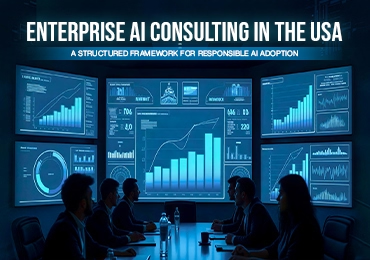
OpenAI vs Generative AI  A Clear Guide for Enterprise Teams
Artificial Intelligence

OpenAI vs Generative AI A Clear Guide for Enterprise Teams

By ACI 6 min Read

Artificial intelligence is now central to how enterprises plan, operate, and deliver services. Many leaders compare OpenAI with the broader field of Generative AI while shaping their technology roadmap. These terms may sound similar, but they represent different concepts. Understanding them helps organizations make better decisions for automation, knowledge management, and enterprise transformation. This guide explains both concepts in clear terms. It outlines when OpenAI is a strong choice, when the wider Generative AI ecosystem is better, and how Aryabh Consulting Inc. supports enterprise adoption. Understanding OpenAI and Generative AI OpenAI is a company that provides specific AI models. Generative AI is a larger scientific and engineering field that includes every model capable of creating new text, images, audio, video, or structured output. In simple terms, OpenAI belongs to the Generative AI category. It is one provider among many, not a separate technology. Enterprises use Generative AI for knowledge search, document understanding, code generation, planning, structured insights, and workflow automation. The broader ecosystem includes large language models, multimodal systems, diffusion models, and custom enterprise-trained models. What OpenAI Provides OpenAI offers general-purpose models such as GPT and DALL·E. These models are trained on large datasets and made available through easy-to-use APIs. Enterprises often adopt OpenAI first because it provides reliable performance with minimal setup. 1. Ready-to-use enterprise capabilities OpenAI supports customer assistance, internal knowledge tools, data extraction, document summarization, and operational automation. 2. Fast integration Teams can embed OpenAI models into existing systems quickly without building new infrastructure. 3. Support for early AI adoption OpenAI is effective for pilots, productivity tools, and cross-department use cases due to its API-first approach and strong documentation. Where Generative AI Goes Beyond OpenAI The broader Generative AI ecosystem supports deeper control, customization, and governance. It includes open-source models, domain-specific models, and private deployments. These options are suitable for teams handling sensitive or regulated data. 1. Custom model training Enterprises can build models that understand industry language, compliance rules, and domain-specific workflows. 2. Greater security and data control Organizations can deploy Generative AI in private cloud or on-premise environments for stronger governance. 3. Flexible vendor options Generative AI allows multi-vendor setups, hybrid workflows, and cost optimization based on usage patterns. These capabilities help organizations align AI with compliance, scale, and long-term operational needs. Choosing Between OpenAI and Generative AI OpenAI supports fast deployment and general reasoning tasks. Generative AI supports deeper customization and privacy. Both choices are valid depending on enterprise requirements. 1. When OpenAI is the right fit OpenAI works well when teams need quick setup, broad use cases, minimal overhead, and consistent performance across operations. 2. When enterprises need a broader AI strategy A wider Generative AI approach is suitable for custom models, legacy integration, strict governance, and industry-specific accuracy needs. 3. Hybrid adoption Many enterprises combine OpenAI with private or open-source models to balance performance, privacy, and cost. Use Cases Across Both Approaches OpenAI and broader Generative AI setups support similar use cases. The difference lies in customization. Common enterprise applications include customer assistance, contract management, clinical documentation, claims processing, compliance support, fraud pattern analysis, knowledge retrieval, and complex workflow automation. Challenges and Enterprise Risks Successful AI adoption requires proper planning. Enterprises must manage privacy control, data security, hallucination reduction, cost management, vendor dependence, evaluation methods, and change management for teams. How Aryabh Consulting USA Supports AI Adoption Aryabh Consulting USA helps organizations choose the right AI approach based on their goals. The team supports multivendor integration, OpenAI implementation, custom model development, architecture design, data governance, workflow automation, and long-term optimization. ACI remains vendor neutral and focuses on delivering accurate, compliant, and scalable AI solutions. Frequently Asked Question 1. What is the difference between OpenAI and Generative AI OpenAI is a specific model provider. Generative AI is the full set of technologies used to create new content and intelligence. 2. Can enterprises use OpenAI and other models together Yes. Many organizations use OpenAI for general tasks and custom models for sensitive operations. 3. Is Generative AI safe for enterprise use Yes. Safety depends on the right governance, private deployment, and data handling. 4. Which industries gain the most value from Generative AI Healthcare, insurance, banking, retail, logistics, and enterprise operations. 5. When should an organization consider custom models Custom models are suitable for sensitive data, high accuracy needs, or strict compliance environments. Conclusion OpenAI and Generative AI are related but serve different enterprise needs. OpenAI focuses on ease of use and fast integration. Generative AI offers deeper control, customization, and privacy. The strongest results come when organizations understand where each approach fits into their roadmap. Enterprises looking for guidance can connect with Aryabh Consulting USA to design a responsible and effective AI adoption strategy. Let's Build Your Secure Cloud Infrastructure Aryabh Consulting offers comprehensive cloud transformation services specifically designed for enterprises seeking secure, scalable, and compliant cloud platforms. Whether you're planning a cloud migration, AI consulting services, AI optimizing your existing infrastructure, or building new enterprise platforms, we bring the expertise and technical discipline to help you succeed. Contact us now to discover how we can help you leverage cloud services to build a more agile, secure, and future-ready enterprise. We love to hear from you Contact Us
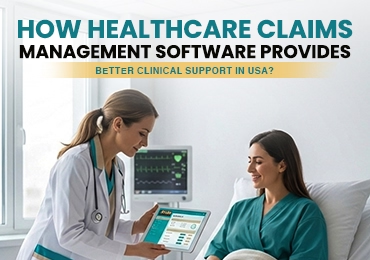
The Role of Cloud Services in Building Secure, Scalable Enterprise Platforms
Remote IT Infrastructure Management

The Role of Cloud Services in Building Secure, Scalable Enterprise Platforms

By Admin 6 min Read

Enterprises today face growing pressure to manage data securely and operate efficiently while adapting to rapid changes in technology and market demands. Traditional IT systems can no longer support these needs because they are expensive, inflexible, and difficult to scale. Cloud services for enterprises have become the foundation for modern enterprise platforms. They combine strong security frameworks with flexible resource management, allowing organizations to protect their data and scale operations without disruption. Cloud adoption is now an essential part of enterprise growth and digital transformation. Why Cloud Services Are Essential for Modern Enterprises Cloud technology supports enterprise agility and continuity. It allows companies to move away from physical data centers and toward a more adaptive, software-driven infrastructure. This approach improves flexibility and reduces downtime. It also gives enterprises better control over data, faster deployment of new solutions, and the ability to operate securely across multiple regions. Studies from leading research firms show that most large organizations are now following a cloud-first approach to stay competitive. By using cloud architecture, enterprises gain the ability to deliver consistent performance, reduce maintenance, and adapt quickly to new business models. The result is a system that grows with the organization while keeping data safe and compliant. Security in Cloud Architecture Security is one of the most important factors in enterprise cloud design. Modern cloud environments provide multiple layers of protection for data, networks, and applications. 1. Centralized Security Management Cloud management tools give IT teams a single view of all resources. This helps them detect issues early, monitor performance, and respond quickly to potential threats. 2. Identity and Access Management Role-based access control and multi-factor authentication limit data access to authorized users only. This reduces the risk of insider threats and unauthorized entry. 3. Security as a Service Cloud providers such as AWS, Azure, and Google Cloud include built-in security tools. These tools use automation and artificial intelligence to detect unusual behavior, manage compliance, and ensure data protection according to frameworks such as HIPAA Compliance and GDPR. 4. Encryption and Auditing Cloud environments encrypt data both when it is stored and when it is transmitted. Regular auditing and automated compliance checks ensure that enterprise systems meet industry standards and maintain reliability. Together, these measures create a secure structure that helps enterprises protect sensitive information and maintain trust across all operations. Scalability and Performance in Cloud Platforms Scalability is a core strength of cloud systems. Enterprises can adjust computing power and storage as needed without investing in new hardware or data centers. 1. Auto-Scaling and Load Balancing Cloud services automatically add or reduce computing resources based on demand. Load balancing ensures that user traffic is distributed evenly, keeping applications fast and reliable. 2. Containerization and Infrastructure as Code Technologies such as Kubernetes and Terraform automate the setup and deployment of infrastructure. They make scaling faster, reduce human error, and allow teams to manage systems consistently across different environments. 3. Elastic Resource Use Cloud scalability supports predictable spending. Companies pay only for the resources they use, which reduces waste and allows them to plan technology investments more effectively. These features help enterprises maintain performance and flexibility while keeping costs under control. Business Benefits of Cloud-Based Enterprise Architecture Cloud-based systems offer clear operational and financial advantages. 1. Agility and Faster Delivery Teams can access tools, computing power, and applications whenever needed. This supports faster product development and quicker responses to market changes. 2. Improved Compliance and Security Major providers meet global compliance standards. Automated updates and built-in controls help organizations stay compliant without adding complexity to IT management. 3. Business Continuity and Disaster Recovery Cloud platforms include backup systems and failover support that reduce downtime during disruptions. This ensures that business operations remain available and data remains protected. 4. Cost Efficiency Enterprises can reduce capital expenses by moving from physical hardware to a subscription or pay-per-use model. This makes enterprise-grade systems more affordable and easier to scale as the business grows. These benefits create a reliable and adaptable technology foundation for modern organizations. The Future of Enterprise Cloud Platforms The future of enterprise platforms is moving toward intelligent and automated cloud operations. Artificial intelligence and predictive analytics are being integrated into cloud environments to monitor performance, optimize workloads, and enhance cybersecurity. Enterprises are also using multi-cloud and sovereign cloud models to meet local compliance rules while maintaining global reach. These models improve flexibility and give businesses more control over where and how their data is stored. Aryabh Consulting helps enterprises design and implement cloud architectures that are secure, efficient, and ready for future demands. Our team focuses on creating systems that balance performance with reliability and align with long-term business goals. Conclusion Cloud services give enterprises the ability to build platforms that are secure, scalable, and ready for continuous growth. They reduce operational risk, simplify compliance, and support global collaboration. Organizations that invest in well-designed cloud solutions today are better equipped to face tomorrow's challenges with confidence. Aryabh Consulting helps enterprises develop secure and scalable cloud ecosystems that strengthen resilience and support digital transformation. Let's Build Your Secure Cloud Infrastructure Aryabh Consulting offers comprehensive cloud transformation services specifically designed for enterprises seeking secure, scalable, and compliant cloud platforms. Whether you're planning a cloud migration, optimizing your existing infrastructure, or building new enterprise platforms, we bring the expertise and technical discipline to help you succeed. Contact us now to discover how we can help you leverage cloud services to build a more agile, secure, and future-ready enterprise. We love to hear from you Contact Us

The Role of AI in Education Software: Transforming Learning for a Smarter Future
Artificial Intelligence

The Role of AI in Education Software: Transforming Learning for a Smarter Future

By ACI 7 min Read

Artificial Intelligence (AI) is redefining how the world learns. From personalized digital classrooms to intelligent assessment tools, AI is reshaping the foundation of education software. In fact, by 2030, the global AI in education market is projected to surpass $25 billion, with the United States, the United Kingdom, and Brazil leading adoption in institutional learning systems. For educational institutions and parents alike, AI is not just a technological upgrade—it’s a strategic shift that enhances accessibility, streamlines operations, and improves student outcomes. As education moves into a new digital era, AI has become the bridge between innovation and inclusion. This article explores how AI is transforming education software, the emerging trends across global markets, and why educational leaders must embrace this evolution to prepare learners for the future. Understanding AI in Education Software Artificial Intelligence in education software refers to the integration of intelligent algorithms that mimic human reasoning to enhance how students learn, teachers instruct, and institutions operate. Unlike conventional systems that simply manage content or attendance, AI-powered education software learns from data, continuously improving its ability to deliver personalized experiences and automate decision-making. What Does AI Do in Education Software? AI technologies—such as machine learning, natural language processing (NLP), and predictive analytics—help educational institutions: Adapt content based on individual learning pace. Automate administrative and grading tasks. Generate actionable insights about student performance. Facilitate data-driven planning and resource allocation. In short, AI transforms education software from a static platform into an intelligent ecosystem that continuously evolves with every interaction. How AI is Transforming the Education Experience The impact of AI extends far beyond classrooms—it reshapes the entire learning ecosystem. For higher authorities in education, understanding this transformation is critical for strategic planning and innovation adoption. 1. For Educational Institutions AI enables institutions to manage operations efficiently by automating scheduling, reporting, and compliance tasks. Predictive analytics help forecast student enrollment, optimize staff allocation, and even detect academic risks before they escalate. 2. For Teachers AI acts as a teaching assistant, simplifying repetitive work like grading assignments and tracking attendance. More importantly, it provides insights into student engagement and progress, allowing teachers to focus on mentorship rather than data entry. 3. For Students Personalized learning platforms use AI to adapt to each student’s strengths, weaknesses, and preferred learning style. Through AI-driven tutoring systems, students receive real-time feedback, enhancing understanding and long-term retention. 4. For Parents AI-driven dashboards offer transparency—allowing parents to monitor progress, identify challenges early, and stay connected with educators through automated communication systems. Together, these applications are redefining the relationship between institutions, educators, and families, building more collaborative and data-driven educational communities. Major Roles of AI in Modern Education Software The success of modern education software lies in its ability to think, adapt, and evolve. Here are the primary roles AI plays in transforming today’s learning environments: 1. Personalized Learning at Scale AI algorithms analyze learner behavior and academic data to create personalized learning paths. Whether a student needs extra practice in mathematics or prefers visual learning methods, AI systems tailor the content to suit their pace and style—something traditional education systems could rarely achieve at scale. 2. Data-Driven Insights & Predictive Analytics By analyzing historical and real-time data, AI tools can predict academic trends, such as which students are at risk of underperforming or dropping out. Institutions can then intervene proactively, improving student success rates and institutional efficiency. 3. Intelligent Administration & Automation AI-based automation simplifies complex administrative workflows—from admissions and fee management to grading and reporting—allowing educators and management to focus on strategic initiatives rather than repetitive manual tasks. 4. Enhanced Accessibility & Inclusion AI supports students with disabilities by providing voice recognition tools, language translation, and adaptive text-to-speech systems. In countries like Brazil, AI is improving access to education for rural and low-income students through localized, low-bandwidth intelligent platforms. 5. Continuous Learning & Institutional Improvement Through data loops and performance analytics, AI systems constantly refine their algorithms, helping institutions identify what works best and improve their processes for better outcomes. As AI becomes central to education software, institutions that adopt these technologies early position themselves as leaders in digital transformation and academic innovation. AI in Education Industry Trends: USA, UK, and Brazil Each region is experiencing its own AI transformation wave, influenced by local educational priorities, policies, and technology readiness. United States U.S. schools and universities are integrating AI within Learning Management Systems (LMS) to automate grading, support remote learning, and improve teacher productivity. Federal initiatives are encouraging responsible AI use to maintain fairness and privacy in education. United Kingdom The UK education system is focusing on ethical AI adoption—ensuring transparency in algorithms used for assessment and admissions. Institutions are leveraging AI-driven analytics to support data compliance and enhance equity in learning outcomes. Brazil In Brazil, AI is a key enabler of educational inclusion. With a large population of remote learners, AI tools are helping bridge digital gaps by providing low-cost adaptive learning solutions, enabling teachers to monitor progress even in remote regions. These regional examples highlight a universal truth - AI in education is not just about technology; it’s about creating equitable, efficient, and adaptive learning environments worldwide. Challenges and Ethical Considerations Despite its transformative promise, the implementation of AI in education software must be handled with care and responsibility. Key challenges include: Data privacy: Protecting sensitive student data from misuse. Algorithmic bias: Ensuring that AI models treat all learners fairly. Transparency: Making AI decision-making understandable to educators and parents. Overreliance on automation: Maintaining the human element in learning while leveraging AI’s efficiency. For policymakers and school authorities, developing frameworks for responsible AI in education is critical to ensure innovation does not compromise ethics or equity. The Future of AI-Driven Education Software AI in education software is still evolving—but its direction is clear. The next decade will see: Predictive learning ecosystems that anticipate student needs. AI copilots for educators to automate curriculum design and content updates. Voice and image recognition tools for immersive classroom engagement. Blockchain-backed credential verification, ensuring academic integrity and secure record keeping. As generative AI and machine learning mature, education systems will evolve into self-optimizing ecosystems, where learning content, assessments, and administration adapt dynamically to changing needs. The future of AI in education software is not about replacing educators—it’s about empowering them to deliver more personalized, inclusive, and data-informed education. Conclusion Artificial Intelligence has moved from being a futuristic concept to an essential component of modern education. It is transforming every layer of the academic ecosystem—from curriculum design to institutional management—making learning more adaptive, efficient, and human-centered. As AI continues to shape the future of education, institutions that act early will gain a competitive edge—creating environments where every student can thrive, every educator can focus on teaching, and every decision is informed by intelligence. At Aryabh Consulting, we understand that the true value of AI lies not in automation alone but in building intelligent systems that serve human potential. By combining domain expertise with innovation, we help educational institutions embrace the power of AI-driven software—securely, responsibly, and effectively. If you’re ready to explore AI-driven education software, contact Aryabh Consulting to discover intelligent solutions that empower students, educators, and institutions. Learn how Aryabh Consulting’s AI development and digital transformation expertise can help your institution embrace innovation responsibly. Contact us today for a consultation. We love to hear from you Contact Us

Maximizing ROI Through Tailored Software Solutions
Digital Transformation

Maximizing ROI Through Tailored Software Solutions

By ACI 7 min Read

Every organization wants its technology investments to show clear, measurable returns. In software development, return on investment (ROI) reflects how well a system improves productivity, lowers costs, and creates new business value. Tailored software solutions deliver strong ROI by aligning technology with the unique structure and goals of each company. Unlike generic tools, they integrate seamlessly into daily workflows, reduce manual errors, and eliminate recurring license fees. This article explains how to maximize ROI with custom software solution through proven development strategies, a practical case study, and measurable metrics. You’ll also learn how user-centric design and continuous optimization sustain long-term business value. Understanding ROI in Software Development In today’s competitive market, understanding ROI in custom software helps leaders make smarter investment decisions. ROI is the ratio between the benefits gained and the total cost of ownership, including design, development, and maintenance. Strong software ROI measurement goes beyond finances—it also tracks efficiency, scalability, and revenue growth. Tailored solutions influence ROI differently from off-the-shelf systems. They’re built around your exact workflows, ensuring each feature adds tangible value. This alignment prevents rework, lowers integration costs, and avoids paying for unused functionality. ROI Factor Impact of Tailored Software Efficiency Reduces manual tasks and boosts productivity Cost Saving Removes recurring license and integration fees Scalability Expands easily without redevelopment Revenue Growth Enables new digital products or services Organizations that evaluate ROI in custom software consistently find stronger performance metrics and faster payback timelines than those using pre-packaged systems. Case Study: Maximizing ROI with Tailored Software Solutions A mid-sized logistics company wanted to improve visibility and accuracy in order tracking. Its operations were manual, slow, and error-prone. Spreadsheets handled scheduling, and communication gaps caused regular delays. Challenges before development: Order delays: 25% Customer complaints: 40% Data entry errors: 15% Development Approach Needs Analysis: Identified workflow bottlenecks, repetitive tasks, and integration gaps. Design & Prototyping: Created a user-centric interface aligned with how staff actually worked. Development: Built custom modules for order tracking, invoicing, and analytics, integrated with existing ERP systems. Testing & Implementation: Conducted quality checks, trained employees, and refined the system through real-time feedback. Results and ROI KPI Before After Improvement Task Completion Time 2 hours 25 mins 79% faster Customer Complaints 40% 10% 75% fewer issues Operational Cost ₹10L/month ₹7L/month 30% savings ROI Timeline — 8 months Payback achieved The tailored solution paid for itself in under a year. Continued optimization further improved logistics performance and supported scalability as the business expanded. This custom software ROI case study shows that aligning technology with real workflows leads to measurable operational and financial outcomes. Key Strategies to Maximize ROI with Custom Software Achieving high ROI requires more than good coding. The following tailored software ROI strategies ensure every development effort contributes directly to measurable business growth. 1. Build Around Real Business Workflows: Design systems that reflect your actual processes. Tailored solutions that match daily operations deliver immediate efficiency gains. 2. Focus on User-Centric Design: User-friendly interfaces increase adoption and reduce training time. When employees understand the system quickly, productivity improves across departments. 3. Integrate Automation Early: Automation reduces manual workload and human error. Early integration ensures processes run consistently and cost-effectively. 4. Prioritize Scalability: A modular design enables easy expansion as your business grows. Scalable custom software ensures your ROI continues to rise without major redevelopment costs. 5. Track KPIs Post-Launch: Regular tracking of productivity, cost savings, and customer satisfaction helps measure ROI accurately and reveals areas for improvement. 6. Continuous Optimization: Keep refining the software based on user feedback and market trends. Continuous improvement keeps your system efficient and maintains ROI over time. The Link Between User-Centric Development and ROI Effective user-centric software development directly increases ROI. When software aligns with user expectations and reduces complexity, adoption rates rise, and operations become smoother. For example, a custom CRM system built with intuitive dashboards helped one enterprise improve sales team productivity by 40%. The company not only saved time but also expanded its revenue potential—proof that better user experience drives measurable ROI. Good UI and UX design reduce training costs and errors, while backend performance ensures speed and reliability. Together, these elements define the overall user experience ROI, showing that usability and performance are both critical to long-term returns. How to Measure ROI of Tailored Software Businesses that invest in custom systems should use clear software ROI metrics to track progress. Properly measuring ROI in custom software helps identify what works and what needs refinement. ROI Metric Measurement Method Ideal Timeline Productivity Compare task completion time 3 months Cost Efficiency Track monthly expense reduction 6 months Revenue Impact Measure new sales or services 9–12 months User Satisfaction Analyze feedback and adoption rates 6 months Error Reduction Evaluate process accuracy and rework 3–6 months Common Mistakes That Reduce ROI Avoiding pitfalls is as important as implementing good strategies. Below are frequent custom software ROI pitfalls and how to prevent them. Poor Requirement Analysis: Unclear objectives lead to misaligned solutions. Solution: Conduct discovery sessions and document every workflow in detail. Ignoring End-User Feedback: Software built without user input often faces low adoption. Solution: Involve users during design and testing to ensure practical usability. Over-Customization: Adding unnecessary features increases cost and complexity. Solution: Focus on modules that deliver direct business value. Lack of Post-Launch Maintenance: Neglecting updates causes performance decline and security risks. Solution: Plan regular maintenance and upgrades to protect ROI. Conclusion Tailored software solutions consistently outperform generic tools by producing measurable and scalable ROI. Success depends on aligning systems with business workflows, focusing on user experience, and tracking performance metrics over time. By following targeted tailored software ROI strategies, organizations can optimize operations, enhance scalability, and ensure each investment produces long-term value. If you’re ready to maximize ROI with custom software, contact Aryabh Consulting to explore user-centric development strategies that deliver measurable business outcomes. Learn how Aryabh Consulting’s user-centric software development process can help you achieve measurable ROI. Contact us today for a consultation. We love to hear from you Contact Us